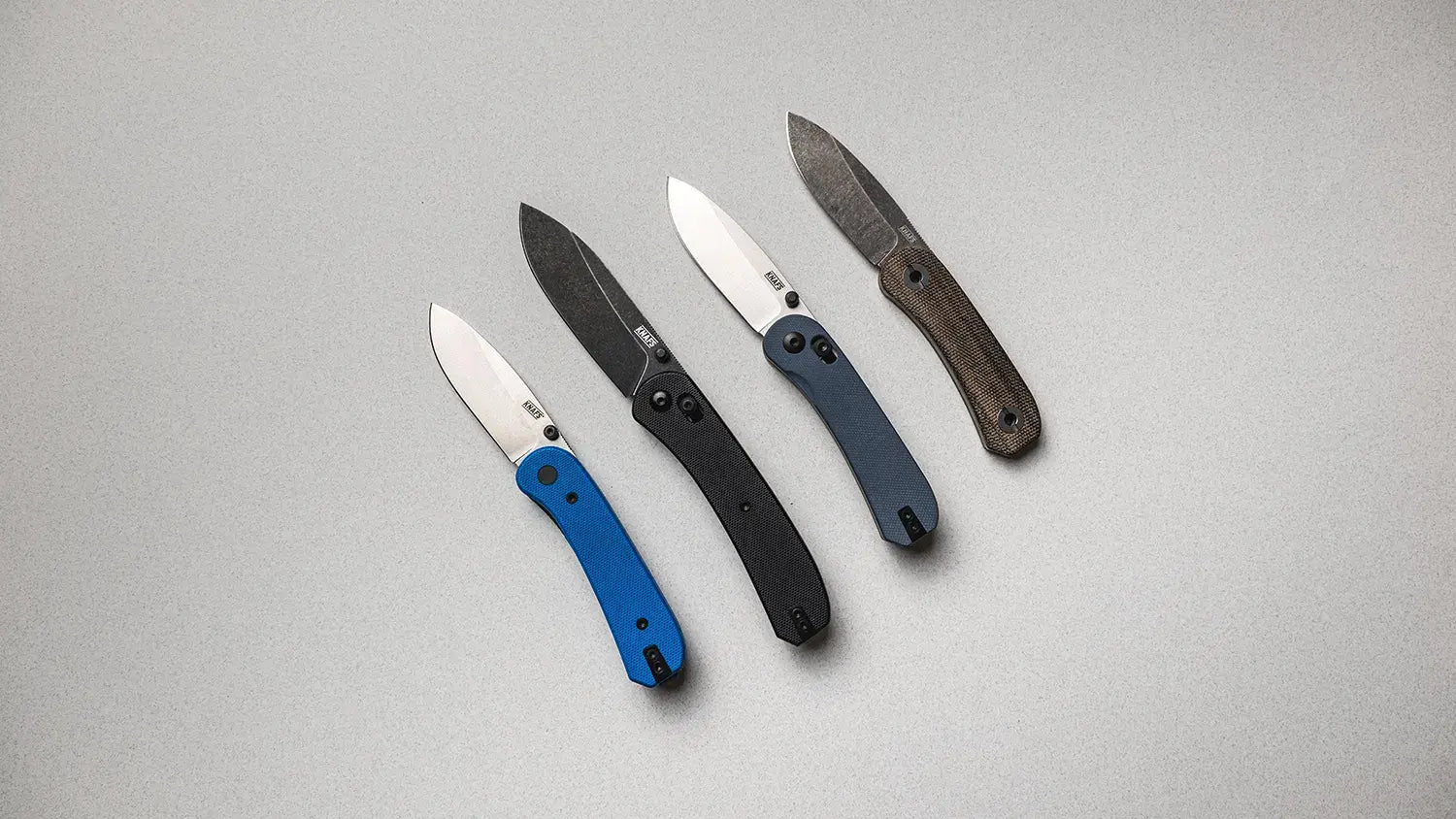
Every knife steel is a trade-off between four core properties. No steel maxes out all four — that's why so many steels exist, and why people argue about them endlessly.
- Edge Retention: How long the blade stays sharp before needing a touch-up. Higher = less frequent sharpening.
- Toughness: Resistance to chipping or breaking. More important for hard-use tasks and thinner blades.
- Corrosion Resistance: How well the steel resists rust and staining. Critical if your knife gets wet regularly.
- Ease of Sharpening: How easy the steel is to bring back to a keen edge. High edge retention can mean harder sharpening.
There's another factor that ties everything together: heat treatment. The same steel, treated differently by two manufacturers, can perform very differently. A well heat-treated D2 blade can beat a poorly-treated S30V blade any day of the week. That's why brand reputation matters, not just the steel name on the spec sheet.
The rule of thumb: Harder steel holds an edge longer but is trickier to sharpen and more prone to chipping. Softer steel is tougher and easier to sharpen, but dulls faster. Everything else in knife metallurgy is a variation on this theme.
The Steels, Explained
D2 Tool Steel
The workhorse. Affordable, durable, widely used.
Budget–Mid Tier
D2 is a tool steel — originally designed to cut and shear other metals in industrial manufacturing. It's been used in knives for decades, and for good reason: it's affordable, widely available, and offers solid edge retention for everyday carry tasks.
D2 excels in abrasion resistance and wear resistance, making it a reliable choice if you're using your knife in dusty, gritty environments. Where it falls short is corrosion resistance — D2 is semi-stainless, meaning it can rust if you leave it wet for too long. Give it a wipe-down after use, and you'll be fine.
A common misconception is that D2 is super tough. It isn't, really — it's hard and wear-resistant, but not particularly tough. Most makers heat treat it at a lower hardness to compensate. Think of D2 as reliable and battle-tested, not cutting-edge. It's become a true budget option in recent years, which means you can get a quality D2 knife for less money than ever before.
Sandvik 14C28N
The budget overachiever. Crazy performance for the price.
Budget–Mid Tier
If there's a budget steel that punches above its weight class, it's Sandvik 14C28N. Made by Swedish steelmaker Sandvik, this stainless steel delivers a combination of extreme toughness, solid edge retention, and excellent corrosion resistance that's genuinely rare at its price point.
14C28N's fine-tuned chemistry — a proprietary balance from Sandvik's forge — gives it an unusually tight carbide structure for stainless steel. This means it gets remarkably sharp and stays there for a good while. It's closely related to AEB-L, a steel beloved by custom knifemakers for its sharpening performance. Think of 14C28N as stainless D2 with better corrosion resistance, easier sharpening, and solid edge retention — it won't quite match S30V in edge retention, but it's closer than you'd expect from a budget steel.
The toughness is where 14C28N really stands out. You rarely get this level of toughness in stainless steel, let alone an affordable one. If you sharpen your knives frequently and want a steel that gets scary sharp, this is the one.
CPM S30V
The classic premium. Still excellent, proven for 20+ years.
Mid–Premium Tier
CPM S30V was introduced in 2001 through a collaboration between knife legend Chris Reeve and steel manufacturer Crucible Industries. It was designed from the ground up for knife blades — a rarity at the time — using Crucible Particle Metal (CPM) powder metallurgy technology. That process evenly distributes hard carbide particles throughout the steel, giving it consistent performance from tip to handle.
S30V contains 1.45% carbon, 4% vanadium, and 14% chromium. The high vanadium content produces hard vanadium carbides, which are responsible for the steel's excellent wear resistance and edge retention. For years, S30V was considered the benchmark for premium knife steel, and it remains one of the most trusted alloys in the industry.
It sharpens reasonably well (despite its reputation — that's actually S90V people are thinking of), holds an edge through extended use, and resists rust well. The main reason S30V is less dominant today is simply that better options have come along since 2001. But less dominant than before still means very, very good.
CPM S35VN
S30V's tougher sibling. The balanced daily driver.
Premium Tier
Introduced in 2009, also from Crucible Industries, S35VN is a direct refinement of S30V. The key change: adding niobium (that's where the N comes from) to the vanadium-chromium carbide formula. The niobium refines the grain structure and improves toughness — roughly 20% tougher than S30V — without giving up the edge retention that made S30V famous.
The niobium carbides in S35VN are also slightly easier to deform and remove during sharpening than the vanadium carbides in S30V, which makes it easier to bring back to a keen edge at home. There's no one area where S35VN is the absolute top of the class, but there's also no real weakness. It has been widely adopted across the knife industry since its release for exactly this reason: it does everything well.
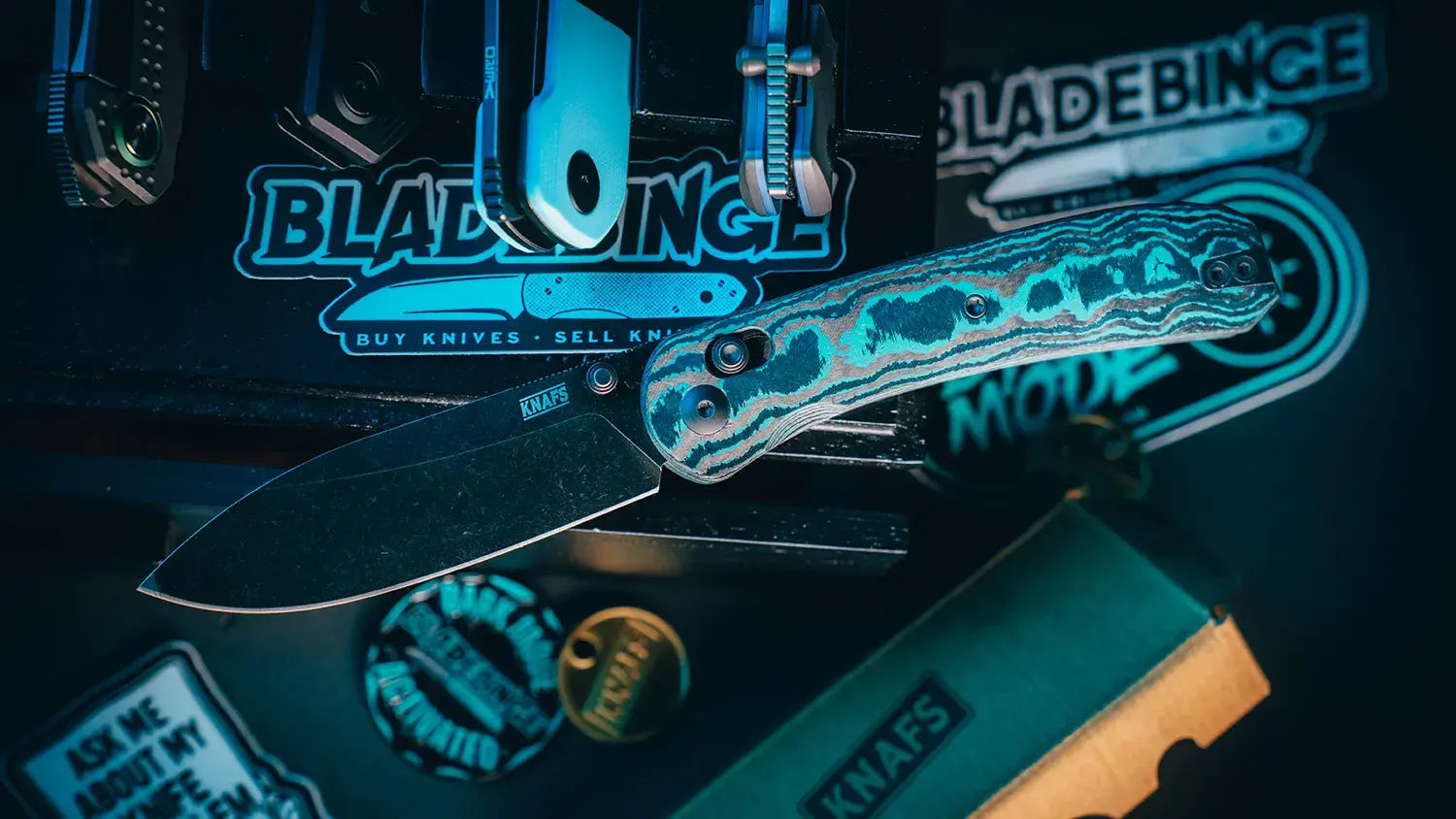
Hardened between 59–62 HRC, S35VN outperforms S30V as well as common steels like 154CM and VG10 across the board. As premium steels go, it's become more affordable over the years as it moved from specialty to mainstream. You'll find it on some of our favorite Knafs knives.
CPM MagnaCut
The new gold standard. Almost no trade-offs.
Premium Tier
Developed by Dr. Larrin Thomas and released in 2021, MagnaCut is genuinely something new. For decades, knife steel involved accepting trade-offs: great edge retention usually meant poor toughness, and great corrosion resistance usually meant worse edge holding. MagnaCut was specifically engineered to break that pattern.
The secret is its microstructure. By eliminating large chromium carbides (which normally rob the surrounding matrix of corrosion-fighting chromium) and using a mix of vanadium and niobium carbides instead, MagnaCut achieves outstanding corrosion resistance while also maintaining excellent toughness and wear resistance. Its carbide structure is finer than most premium powder metallurgy stainless steels, which also means it grinds and finishes more easily than expected.
In standardized tests, MagnaCut's edge retention sits roughly in line with S35VN and CPM-4V — excellent, but not in the impossible-to-sharpen territory. Its corrosion resistance tested better than 20CV and close to stellar specialist steels like Vanax. Toughness is exceptional. For most users, MagnaCut represents the closest thing to a no-compromise steel available today.
Quick Comparison Chart
Here's how the five steels stack up across the key properties. Remember: these are general characterizations — actual performance depends heavily on heat treatment and blade geometry.
|
Steel |
Edge Retention |
Toughness |
Corrosion Resist. |
Ease of Sharpening |
Price Tier |
|
D2 |
Medium |
Medium |
Low–Med |
Medium |
Budget |
|
14C28N |
Good |
Good |
Excellent |
Excellent |
Budget |
|
S30V |
Good |
Medium |
Good |
Medium |
Mid |
|
S35VN |
Good |
Good |
Good |
Good |
Mid–Premium |
|
MagnaCut |
Excellent |
Excellent |
Excellent |
Good |
Premium |

Leave a comment
This site is protected by hCaptcha and the hCaptcha Privacy Policy and Terms of Service apply.