While we may be biased in that we think a knife is an essential part of a wilderness survival tool kit, we aren’t so self-absorbed that it’s the most essential item to pack. When you’re intentionally or unintentionally stuck in the woods, we know you need a few more things to round out your pack to make the experience more enjoyable.
Building a wilderness survival tool kit for outdoor adventures isn't about pretending you're an off-grid mountain hero. It's about admitting that human beings are remarkably fragile without basic tools. You should never be stuck without shelter, a means to start a fire, a way to catch or prep food, or a way to procure water.
Here's how we at Knafs view field gear when things stop being a casual weekend walk.
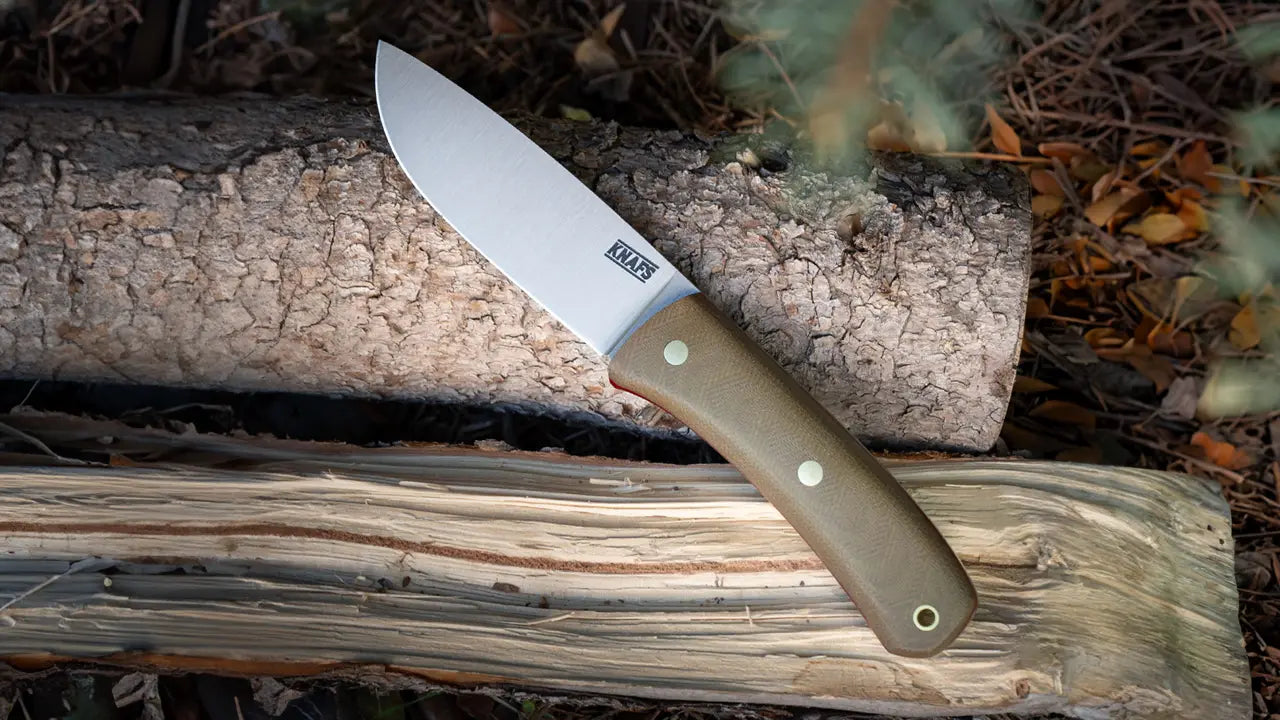
1. Start with a Fixed Blade (Because Pivots Hate Dirt)

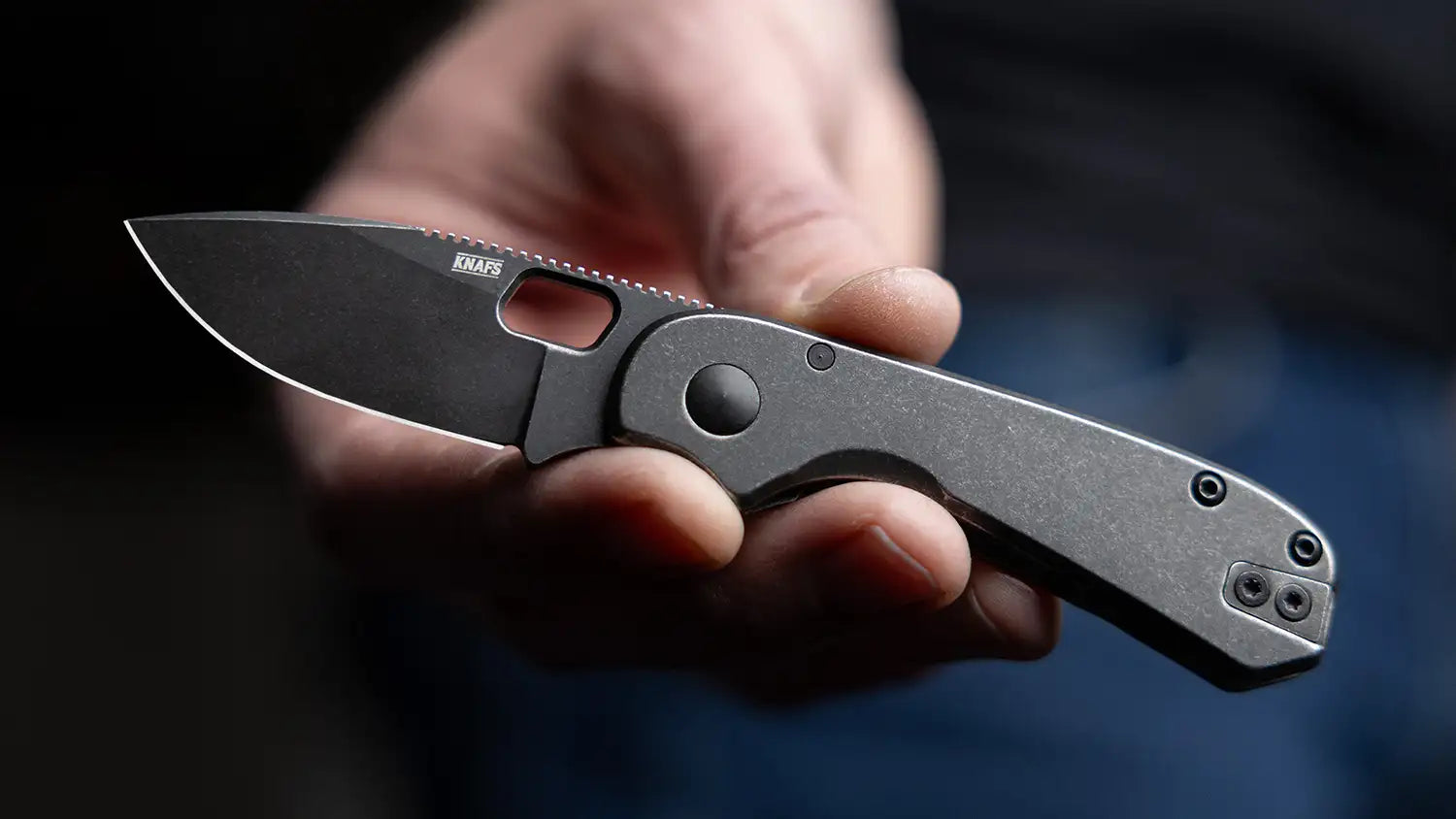
Folding knives are wonderful. We make 'em, we carry 'em, and we love 'em dearly. But if you're putting together a core survival setup, a fixed blade takes top priority every time.
Folding knives have way too many moving parts: pivots, detents, and tiny mechanical lock bars. Mud, grit, pocket lint, wet sand, and food bits love nothing more than getting into those moving parts and grinding the gears, so to speak. A fixed blade eliminates moving parts so there’s less to clean at the end of each task, which is ideal for when you have a lot on your literal and metaphorical tin plate at the campsite.
When you need to process wood for a fire or notch a shelter pole, you want a full-tang knife. Full-tang simply means the steel extends continuously from the tip of the blade all the way through the end of the handle. If you put heavy pressure on a hidden-tang or cheap rat-tail knife, the handle can snap right off, leaving you holding a sad plastic stump.
A full-tang design gives you a chunk of steel that tolerates real work. You can baton wood with it without worrying that the handle's gonna explode into three pieces. Just remember: a knife is still a cutting tool, not a crowbar. If you try to pry open a boulder with it, physics will win every time.
2. MagnaCut Steel: Science Doing Heavy Lifting

Steel snobbery is a legitimate hobby in the knife community, but out in the field, performance boils down to three things: edge retention, toughness, and stain resistance. Historically, knife makers had to pick two. High toughness usually meant low rust resistance; ultimate stain resistance often meant an edge that went dull if you looked at a pinecone too hard.
Then CPM MagnaCut came along. Developed by Dr. Larrin Thomas, MagnaCut broke those old trade-offs by balancing high corrosion resistance with impressive toughness and edge life.
We use MagnaCut in our USA-made Lulu fixed blade for a very un-dramatic reason: backcountry conditions are wet, sweaty, dirty, and chaotic. You might cut damp rope, leave the knife in a wet sheath overnight because you were dead tired, or use it in high-humidity brush. MagnaCut resists corrosion remarkably well while holding an edge through serious cutting tasks.
Is it indestructible? Absolutely not. If you scrape it along granite, it'll dull. If you store it covered in salt water for two months, it can still spot. But as far as modern steel formulations go, it lets you focus on camp chores rather than obsessively wiping off moisture every four minutes.
3. High-Vis Handle Scales: Embrace the Neon
Tactical black gear looks slick on an outdoor show. In real life, tactical black gear's impossible to find once the sun starts setting.
- Traditional Tactical Look: Looks amazeballs in photos, but blends right in with dirt and vanishes into dead leaves by 7:00 PM.
- High-Vis Reality: Stands out against the brush so you actually know where you set your stuff down at dusk.
If you set anything dark and camouflage down on dirt, rock, or dead leaves, you're gonna spend twenty minutes looking for it. That's why we offer high-visibility scale options, like bright orange or neon pink.
Handle texture matters just as much as color. Canvas Micarta scales are a favorite around the Knafs workshop because the textured cotton fabric embedded in resin gets grippier when wet. Sweat, rain, or fish slime won't turn the handle into a slick bar of soap.
High-vis can apply to other gear you put in your wilderness survival kit, too. Paracord, ferro rod, hydration kit, compass, blankets, gloves… it can all be high-vis so it’s easier to keep track of at your site. It may not be the most calming color palette for the eyes, but it sure beats frantically searching for items and cursing yourself for misplacing them.
4. Fire and Maintenance: The Rest of the System

A knife on its own is only one part of the equation. A complete wilderness survival tool kit needs a way to make fire and a basic way to maintain the blade.
A sharp, squared 90-degree spine on the back of a knife blade acts as a built-in scraper for ferrocerium fire-starting rods. Striking a ferro rod with a square spine throws a shower of hot sparks into your tinder without using your sharp primary cutting edge.
Edge maintenance is way easier when you do it early. A small pocket strop with compound or a lightweight field sharpener fits into any pack pocket. Spending two minutes touching up an edge after processing wood keeps you from forcing dull steel through heavy cuts later.
Before sheathing the knife, clean off any dirt and sap. Touch up the edge after heavy wood processing, check the scale screws for tightness, and keep the ferro rod paired with that 90-degree spine.
5. Non-Knife Essentials to Round Out Your Pack
While we sell knives, and are big enough fans we designed an entire poster for them, we're fully aware you can't eat a fixed blade or drink a Scandi grind. A well-balanced survival kit includes the unglamorous items that keep you alive:
Navigation Tools
First and foremost, you gotta know where you’re going and how to get back to civilization. While it’s true that “wherever you go, there you are,” if you don’t know where you’re going, it doesn’t matter where you are! Pack analog forms of navigation like a paper map and be sure to have a compass.
Water Filtration & Storage
Not only do you need a way to filter non-potable water, but you need a way to store it so you’re not constantly cleaning scummy, parasite-ridden puddles every time you need to quench your thirst. Invest in a water filtration system and some storage so you can avoid dehydration while roughin’ it.

Solar Blanket
Even if you get a roarin’ fire day 1, solar or thermal blankets can be a literal lifesaver if inclement weather douses your flames. They pack down real good so you can justify adding one to your bag in case of emergency.
Fast Boiling System
A compact stove like a Jetboil boils water fast for heat, hot hydration, or freeze-dried food when your core temp drops.
High-vis Gear
In general, high-visibility gear can be a lifesaver simply because you won’t ask yourself where your knife, paracord, or gloves are every time you put them down. Whatever you bring, consider opting for the most obnoxious colorway it comes in!
First-aid Kit
You’d think it goes without saying, but bring a first aid kit specifically tailored to backcountry adventures. And you don’t just have to take our word for it; the American Red Cross recommends the following (and so much more) for wilderness first aid: triangular cravat bandage, gauze, EpiPen, oral rehydration salts, biodegradable soap, irrigation syringe with 18-gauge catheter, thermometer, and waterproof containers.
6. Keeping Gear Organized: The Burrito Approach

Loose tools bouncing around the bottom of a pack are noisy, easy to misplace, and rough on fine edges.
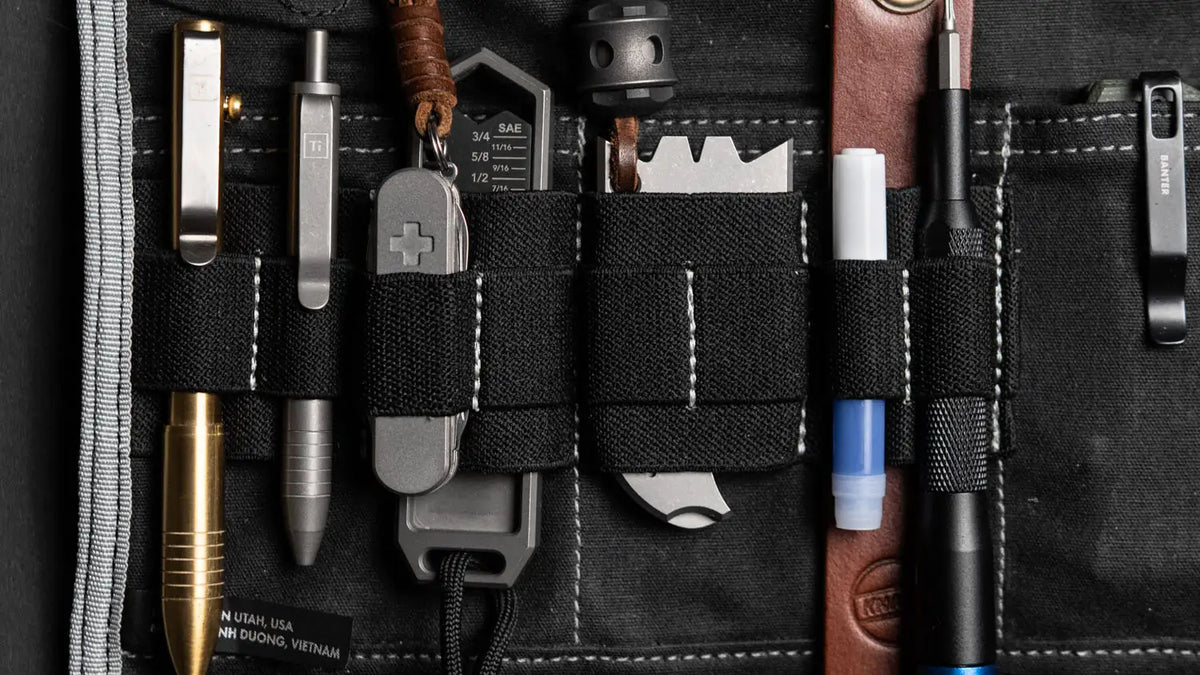
The Knafs Burrito Grande gives smaller tools and maintenance gear a place to stay together. A pocket strop, field sharpener, ferro rod, spare hardware, and other small camp tools can all live in the roll instead of wandering through the pack.
What you carry depends on the trip. The useful part is knowing where everything is before you need it. Emptying your entire backpack onto the ground is technically a system, but not a very good one. The Burrito Grande gives the small stuff a home so you can spend less time digging and more time getting on with the trip.
To the moon, amigos.

Leave a comment
This site is protected by hCaptcha and the hCaptcha Privacy Policy and Terms of Service apply.