Pocket knife field maintenance isn’t something most people think about until they’re stuck in the weeds with a blade that won't open or close without a fight. When you're out there in the elements, your gear takes a beating, and your knife is usually on the front lines of that battle. If you don’t have a solid plan to keep your tool running, the wilderness will quickly find the weak spots in your equipment.
Outdoor environments are brutal on precision folding knives. Tree sap gums up locks, river silt destroys bearing tracks, and pocket lint creates dangerous lock-slip conditions when you're far from medical help.
A folder is a beautiful piece of engineering, but those tiny tolerances mean that it doesn’t take much to throw a wrench in the gears. A single grain of sand can turn a glassy deployment into a horrifying crunch. A dollop of fresh pine resin can bind up your lock bar so badly that you risk losing a finger trying to force it shut.
When you're far from home, these little annoyances transform into legitimate safety hazards, making pocket knife field maintenance a survival skill rather than just a chore. You need your cutting tool to perform reliably when you're building emergency shelters or cleaning game.
By packing a minimal, lightweight field-kit and mastering three basic primitive maintenance techniques, you can keep your Knafs optimized all summer long without carrying a full garage toolbox.

The Enemy Emerges: Overcoming Tree Sap and Grime with Pocket Knife Field Maintenance
Pocketing a knife after whittling pine or fatwood can instantly glue the blade shut or ruin a liner lock's engagement. If you’ve ever spent an afternoon carving up kindling or processing pitch wood for a fire, you know exactly how fast that sticky resin coats everything it touches.
It gets on your hands, it gets on your clothes, and it absolutely wreaks havoc on your folding knife. As the sap cools down, it hardens into a substance that behaves less like a natural fluid and more like industrial-strength epoxy.
This leads to a brutal case of liner lock stick, where the lock face gets so fused to the tang of the blade that you have to use two hands and a pair of pliers just to release it. Even worse, it can prevent the lock from engaging fully in the first place, creating a terrifying scenario where the blade could collapse back onto your fingers during a heavy cut.
When dealing with these natural adhesives on the trail, keep these essential factors in mind:
- Organic resins cure rapidly when exposed to cool mountain air, creating a solid barrier inside the tight spaces of your folder handle.
- Forcing a sticky blade open repeatedly can bend the liners or permanently wear out the lock face geometry.
- Debris like pocket lint, dirt, and bark dust will cling directly to the sap, compounding the mechanical blockage.
- Traditional dry wiping will only smear the residue across a larger surface area, driving it deeper into the pivot mechanisms.
The Campfire Trick for Pocket Knife Field Maintenance
When you're dealing with a blade that’s completely locked up by organic resin, you need a way to loosen things up without ruining your gear. The campfire trick is a classic backcountry solution that relies on controlled, ambient heat from a safe distance near a campfire to soften stubborn pine sap without damaging the heat-treat of the steel.
You have to be smart here. Do not shove your knife directly into the glowing coals unless you want to destroy the temper of your blade and turn your premium steel into a soft piece of junk. Instead, follow these steps to execute the trick safely:
- Hold the closed knife in the warm air rising around the edge of the fire ring, keeping it well above direct flames.
- Alternatively, find a smooth, warm stone near the coals and rest the frame of the knife against it for a few minutes.
- Monitor the temperature constantly; you just want to get the handle scales and frame comfortably warm to the touch.
- As the ambient heat spreads through the handles, the hardened sap will liquefy again, allowing you to wipe away the worst of the gunk with a stick or a scrap of cloth.

Natural Solvents and How to Clean Sap off a Knife
If heat alone doesn’t do the trick, it's time to raid your camp kitchen. Knowing how to clean sap off a knife without a bottle of rubbing alcohol or acetone comes down to basic chemistry. Like dissolves like, which means you can utilize high-fat camp items like a dab of butter, bacon grease, or cooking oil to break down organic resins before wiping clean with a rag.
The fat molecules interlock with the sticky compounds in the sap, neutralizing their sticky properties and turning the whole mess into a soft, slippery slurry. Here is how you get it done effectively:
- Apply a generous dollop of leftover bacon fat or olive oil directly onto the sticky spots of the blade and pivot area.
- Slowly work the action back and forth a few times to spread the fat into the nested parts of the locking mechanism.
- Use a clean bandana, a cotton rag, or even a handful of dry grass to buff the loosened residue completely away.
- Wipe the blade down a final time with a clean section of cloth to remove any excess organic grease that might attract bugs later.
The Fixed Blade Alternative for Hard Woodworking
While mastering these tricks is great, sometimes the best pocket knife field maintenance strategy is avoiding the problem in the first place. If you know you're going to be doing hours of heavy wood preparation, shelter building, or carving resinous logs, a folding knife might not be the right tool for the job.
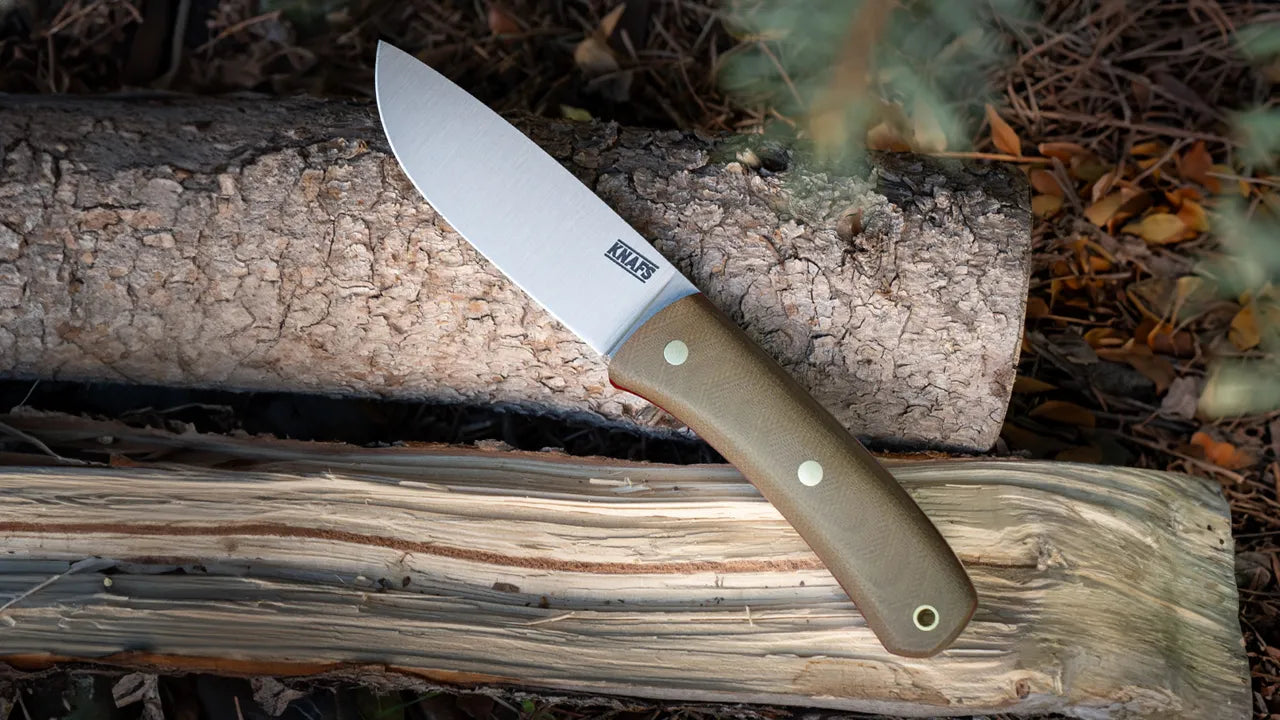
Switching to the Knafs Lulu fixed blade for sap-heavy wood carving eliminates this failure point entirely. The Lulu has no moving parts, no pivot cavity, and no locking mechanism to get jammed up. It features a rugged Scandi grind sharpening field profile that excels at pushing through thick timber.
When a fixed blade gets covered in sticky pine sap, you don’t have to worry about a thing; you just scrape it off against a rock or leave it dirty until you get home, because there are zero internal mechanisms to fail. It keeps your folders pristine for tasks that require a smaller, more delicate tool.

Defeating Silt, Sand, and Water via Pocket Knife Field Maintenance
Dropping a knife like the Lander into fine sand or river mud can make the action feel like grinding gears. Bearings are incredible for creating that addictive, lightning-fast deployment we all love around the house, but they have a massive vulnerability when they go out into the wild.
The tiny steel or ceramic balls ride in a delicate track inside the pivot, and if anything gets in their way, the party is over. Instead of smooth rotation, you get a gritty, crunching sensation that physically pains anyone who cares about their tools.
If you leave that grit inside the pivot and keep forcing the knife open and closed, those tiny hard particles will chew up your liners and blade steel, permanently ruining the action of your tool. You have to handle this immediately before permanent scoring occurs.
Understanding the threats of trail debris makes it easier to keep your tool clean:
- Fine sand particles act as an aggressive abrasive material, sanding away the polished surfaces of your internal tracks.
- Mud introduces a mixture of organic matter and moisture that holds debris against the moving parts like a paste.
- Ignoring pivot grit causes the blade deployment to become uneven, affecting your ability to open the knife safely with one hand.
- Trapped dirt can block the detent ball path, causing your blade to lose its crisp retention when closed.
The High-Pressure Flush Method
When disaster strikes and your folder takes a dive into the dirt, don’t panic and don’t start rubbing it with your shirt sleeve, which will only drive the grit deeper into the mechanism. Instead, you need a high-pressure flush.
Using a standard camp hydration bladder or a clean river stream to forcefully flush grit out of the pivot without disassembly is your best bet. Grab your gear and try this immediate field fix:
- Grab your water bladder, bite down on the valve to build up some serious pressure, and aim the nozzle right at the pivot gap.
- Blast a stream of clean water directly into the opening while slowly and carefully cycling the blade back and forth.
- If you don’t have a hydration pack, find a spot where a mountain stream flows rapidly over some clean rocks.
- Hold the knife securely in the fast-moving water and let the natural current wash away the loose particles.
This is a fundamental technique for fixing a gritty pocket knife pivot on the trail without losing small parts in the dirt.

The Critical Dry Out Phase
Once you’ve successfully flushed the sand out, your job is only half done. Water is a teammate during the cleaning phase, but it turns into a mortal enemy if it stays trapped inside your handle scales. The dry out is why leaving a washed knife open in the sun on a dry rock is critical to avoid internal rust trap conditions on the liners.
Even if your knife features a highly stain-resistant stainless steel, moisture trapped between the scales and the metal liners creates a stagnant, oxygen-deprived environment where corrosion can thrive. Take these steps to make sure your knife is bone-dry:
- Open the blade completely to expose the inner workings and locking surfaces to the air.
- Lay the knife down flat on a hot, sun-baked boulder or a clean camp table surface.
- Give it at least thirty minutes to bake in the direct warmth of the sun.
- The heat from the rock and the direct sunlight will evaporate every hidden drop of moisture from the nested parts, ensuring you don't get an unpleasant orange surprise later.
Navigating the Silt of Southern Utah
This cleaning process is especially vital depending on where you like to explore. If you're hiking down in canyon country, you're dealing with a completely different level of danger. Specifically mention the ultra-fine silt found along the Colorado River or Southern Utah canyons, which easily bypasses standard knife tolerances.
This stuff is not regular playground sand; it's a microscopic, powdery dust that floats in the water and is suspended in the air. It finds its way into the tightest seams imaginable, blowing right past the scales and nesting directly inside the bearing tracks. When you're backpacking through these regions, cleaning sand out of knife bearings becomes a daily ritual. You have to stay ahead of it, or the desert will chew your folding knife up and spit it out.

Building the Ultra-Light Field Kit for Pocket Knife Field Maintenance
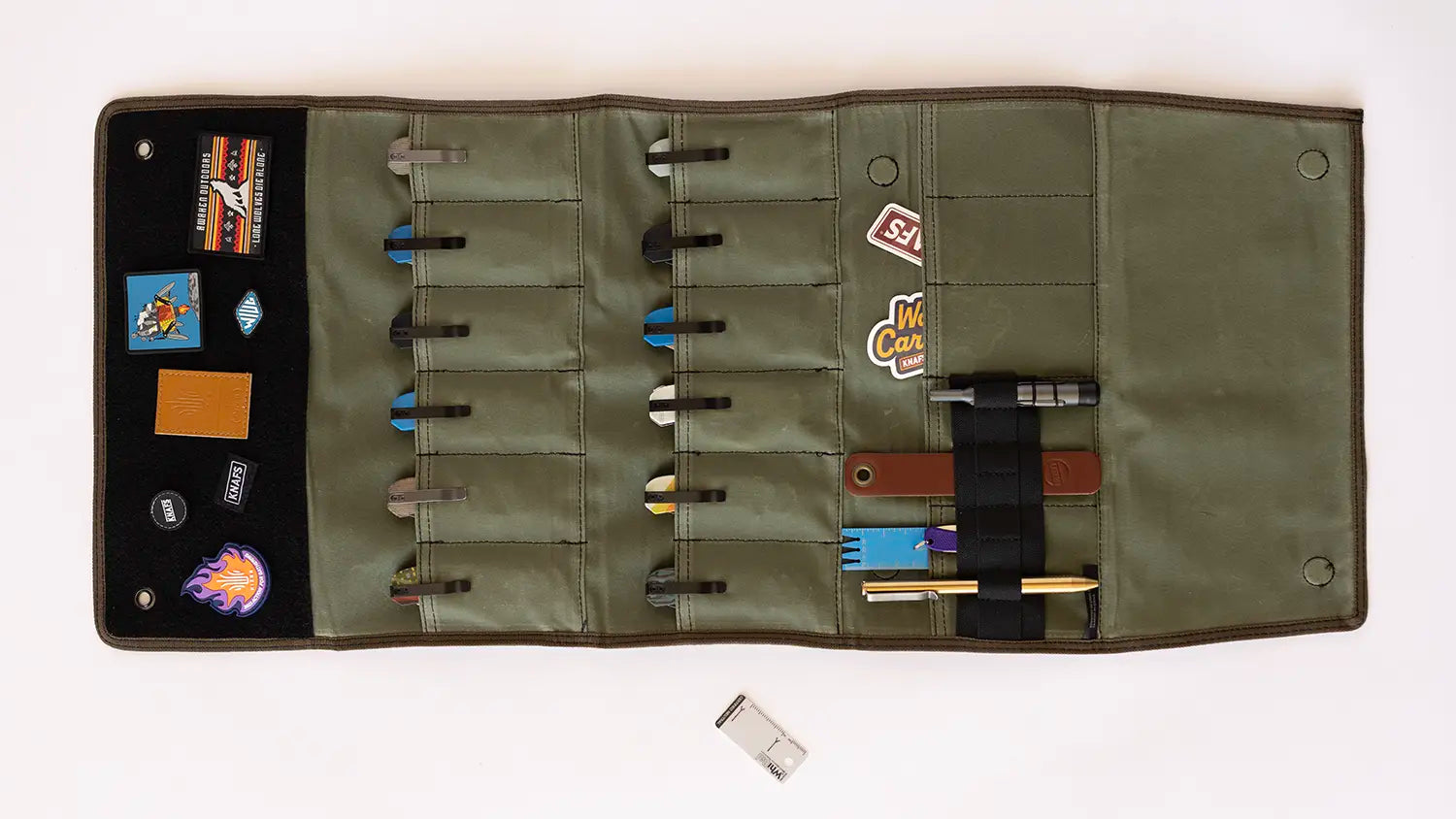
You don’t need to pack the whole Tool Burrito for a weekend hike, but you do need a minimalist contingency plan. We love big, comprehensive maintenance kits when we are sitting at our kitchen tables, but carrying heavy gear up mountain passes is a great way to ruin a trip.
Every ounce counts when you're hauling your life on your back. However, going completely empty-handed leaves you exposed to mechanical failures that could easily be fixed with a few grams of smart gear. The secret is assembling the best lightweight knife tool kit for backpacking that keeps the weight under two ounces while giving you total control over your gear hardware.
A minimalist field setup should include these specific items to cover your bases:
- A compact, hollow bit driver designed to hold multiple micro-bits inside its handle frame.
- A specialized double-sided precision bit featuring the standard configurations for outdoor pocket knives.
- A leak-proof micro-dropper bottle filled with a high-performance protective lubricant.
- A lightweight, flexible stropping medium that can be packed flat inside your survival pouch.
The Micro-Driver Essential
The core of your miniature field kit is a way to turn screws. Knives vibrate when you use them, and walking miles down a bumpy trail can slowly back out a pivot screw until the blade is wobbly and unsafe.
Carrying just a single lightweight bit driver with a double-sided T6/T8 bit solves this issue entirely. Most modern folders rely on these two specific sizes for their body screws and pivots. By carrying a tiny, skeletonized driver or a compact bit holder, you gain several massive field advantages:
- You can snug down a loose pocket clip before it catches on a branch and falls off into the brush.
- You can adjust your pivot tension precisely if changes in temperature cause the action to stiffen up.
- You have the ability to do a full emergency breakdown if something gets hopelessly jammed inside the frame.
- It takes up less space than a stick of lip balm but keeps your tool structurally sound through days of heavy use.

The Nano-Lube Solution
Water and friction are constantly working against your blade, which means you need a way to restore slickness and fight off moisture after a heavy cleaning session. A tiny, travel-sized dropper bottle of knife pivot lube or mineral oil is an absolute lifesaver out on the trail.
You only need a drop or two to completely revitalize a dry pivot after you’ve flushed it out with river water. Furthermore, rubbing a thin film of oil across the flats of your blade provides vital corrosion protection in the wild, preventing humid mountain air or salty sweat from pitting your cutting edge. If you use your knife for slicing up trail cheese or summer sausage, stick to food-safe mineral oil so you don't ingest nasty synthetic chemicals with your dinner.
The Backup Stropping Hack
Keeping your edge sharp is just as important as keeping the action smooth, but you don't want to carry a heavy sharpening stone on a fast-and-light backpacking trip. That’s where some creative thinking comes into play.
How to use the rough cardboard edge of a freeze-dried meal pouch or the back of a leather belt as an emergency strop to realign a rolled edge on the fly is a game-changing skill. When your knife starts feeling dull after carving wood, the edge often is not actually worn down; it has just rolled slightly to one side. Try this quick fix next time your blade stops biting:
- Find an empty cardboard food wrapper or pull off your heavy leather waist belt.
- Hold the material taut against your knee or lay it flat on a sturdy camp log.
- Angle the blade edge slightly away from you and stroke it backward along the tough, fibrous surface.
- Repeat this motion 10 to 15 times per side, pulling that microscopic edge back into perfect alignment.
It won't fix a massive chip from hitting a rock, but it will bring back that clean, paper-slicing bite without adding a single milligram to your pack weight.

The Knafs Advantage in Pocket Knife Field Maintenance
When we design tools at Knafs, we’re not just thinking about how they look on a shelf or how they feel when you open them in a clean office. We think about the muddy, wet, chaotic reality of the real world.
Knafs tools are built for field-stripping. We don't use proprietary screws that require weird specialized tools to turn. There’s nothing more frustrating than buying a premium knife, taking it out into the wilderness, and realizing you can’t even adjust the pivot because the manufacturer used a bizarre, custom three-pronged screw that requires a specific factory wrench to adjust. We think that’s nonsense.
Your process should be simple, intuitive, and stress-free. The use of robust, standardized Torx hardware across all our knives ensures that a single small bit can completely take apart and rebuild your tool under a pine tree if absolutely necessary.
We build our gear with maintenance-friendly principles in mind:
- We standardize our knives around premium Torx T8 hardware because it's deeply recessed and resists stripping out under pressure.
- Our hardware stands up to the rugged torque required to tighten things down in less-than-ideal trail conditions.
- If you drop your Lander into a swamp, you can pull out your micro-driver, take out the body screws, and wipe down the liners on a log.
- You can lube the bearings, clean out the tracks, and assemble the entire knife back together in minutes without losing your mind.
We give you the confidence to actually use your knives hard, knowing you have the power to fix them anywhere. A knife should not be a fragile piece of art that you're scared to scratch or get dirty. It's a tool, an extension of your hand, and it's meant to cut, scrape, and carve its way through your outdoor adventures.
Because our knives are designed from the ground up to be modular, accessible, and easy to service, you don't have to baby them. You can push them to their absolute limits because you know that pocket knife field maintenance is a straightforward job that you're fully equipped to handle.

Wrapping Up the Trail Guide
At the end of the day, keeping your folding knife in peak condition out on the trail does not require a degree in mechanical engineering. Sap can be dissolved, sand can be flushed, and edges can be stropped using what’s already in your pack. It's all about using your head, understanding the basic mechanics of your tool, and not panicking when things get a little crunchy.
With some warmth from a campfire, a little bit of camp cooking fat, a quick water flush, and a smart backup stropping surface, you can conquer almost any maintenance emergency that happens far from civilization. Remember these quick takeaways for your next adventure:
- Heat softens resins; high-fat food items break them down safely without ruining the blade steel.
- High-pressure water flushes out destructive trail sand, and direct sunlight prevents internal rust pockets.
- Standard Torx hardware allows you to make quick adjustments anywhere with a two-ounce micro-kit.
- A clean edge can be maintained on the fly using standard camp garbage like cardboard meal packaging.
A dirty knife isn't a broken knife—it's just a sign of a good trip. Knowing how to field-maintain your steel ensures you're never left without an edge when it matters most. Your knife is one of the most critical safety tools you carry in the woods, and keeping it running smoothly is your responsibility.
When you take care of your tools, they take care of you, whether you're clearing a trail, building an emergency shelter, or just slicing up a well-deserved steak at the end of a long day of hiking.

Leave a comment
This site is protected by hCaptcha and the hCaptcha Privacy Policy and Terms of Service apply.